Musical Inheritance
Sammy’s musical story begins with his parents. His father and mother came to Lorain from rural Puerto Rico, bringing with them traditions of jíbaro music, the cuatro, and the communal music-making of Christmas parrandas. His father, Gumersindo De León, played the cuatro and taught his sons to play guitar. In Lorain, these traditions became part of the musical life of the De León family.
The Cuatro
The cuatro is one of the defining instruments of Puerto Rican music. Closely associated with jíbaro music—a musical form characteristic of Puerto Rico’s rural interior—the cuatro accompanied songs, dances, and celebrations and became an important symbol of Puerto Rican cultural identity.
For Gumersindo De León, the cuatro was not just a musical instrument. It was a connection to his Puerto Rican cultural heritage and, as Sammy recalls, “he loved it!”. Sammy remembers his father singing and playing the cuatro for his own enjoyment, rather than as a professional musician.
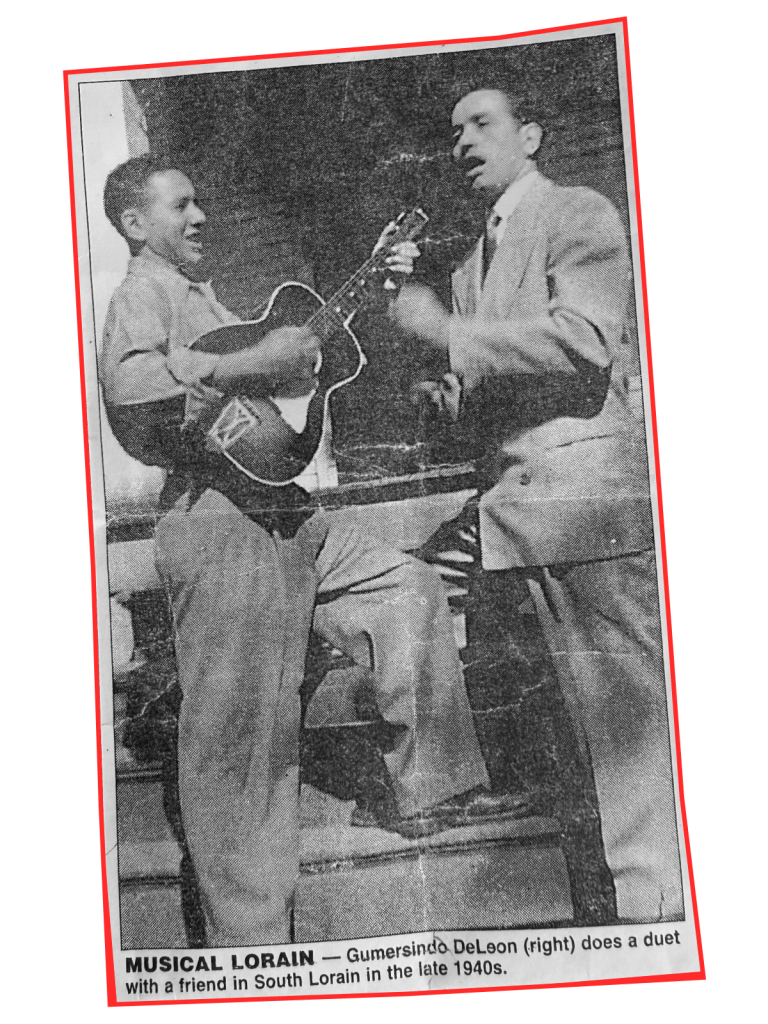
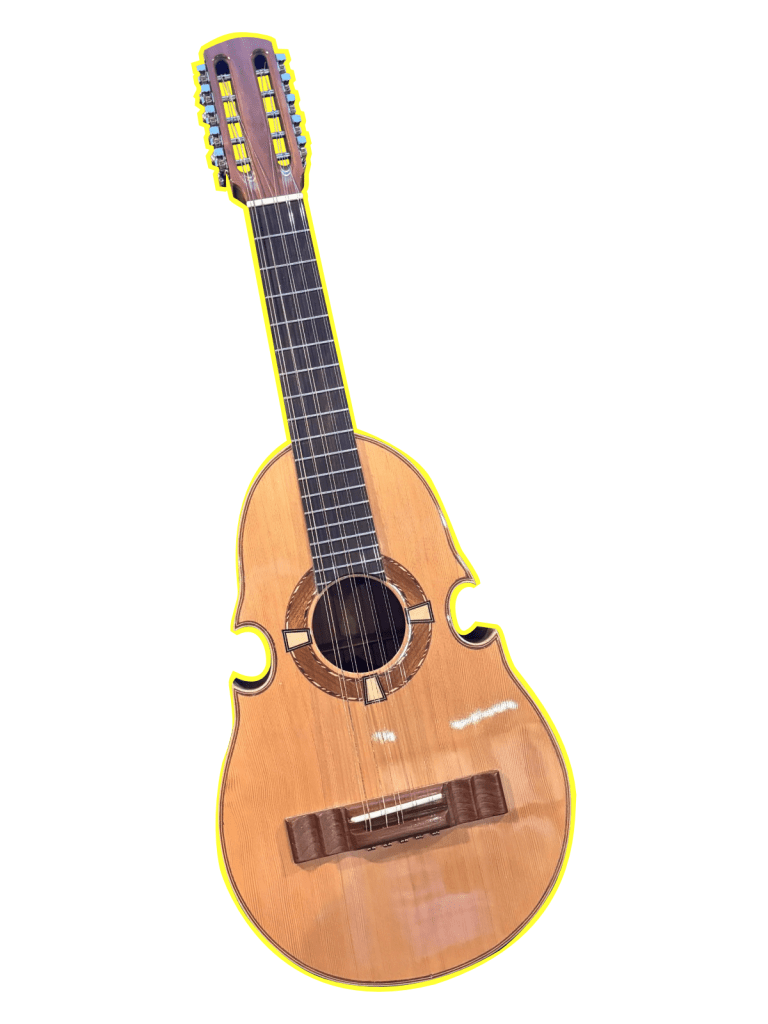
Gumersindo also brought his children into his music. Sammy and his brothers learned their “baby steps” on guitar so they could accompany their father while he sang and played the cuatro.
Learning to Sing
Music was woven into Sammy’s life not only through his father and the cuatro, but also through his mother and the family’s life at home. Sammy remembers that both of his parents loved music—“to the end of the world,” as he puts it. His mother was the quieter of the two, but she loved to sing, and she did it constantly while doing her many chores around the house.
That musical life extended beyond the home, at Sacred Heart Chapel, the Catholic church at the center of Lorain’s Hispanic community. Founded in 1952 as the first Hispanic parish in the Diocese of Cleveland, Sacred Heart served not only as a place of worship but also as a center of community life and support. It was there that Brother Cyprian Kittel, the church’s organist and choir director, taught Sammy and his siblings how to sing in harmony, work with different vocal parts, and keep time.
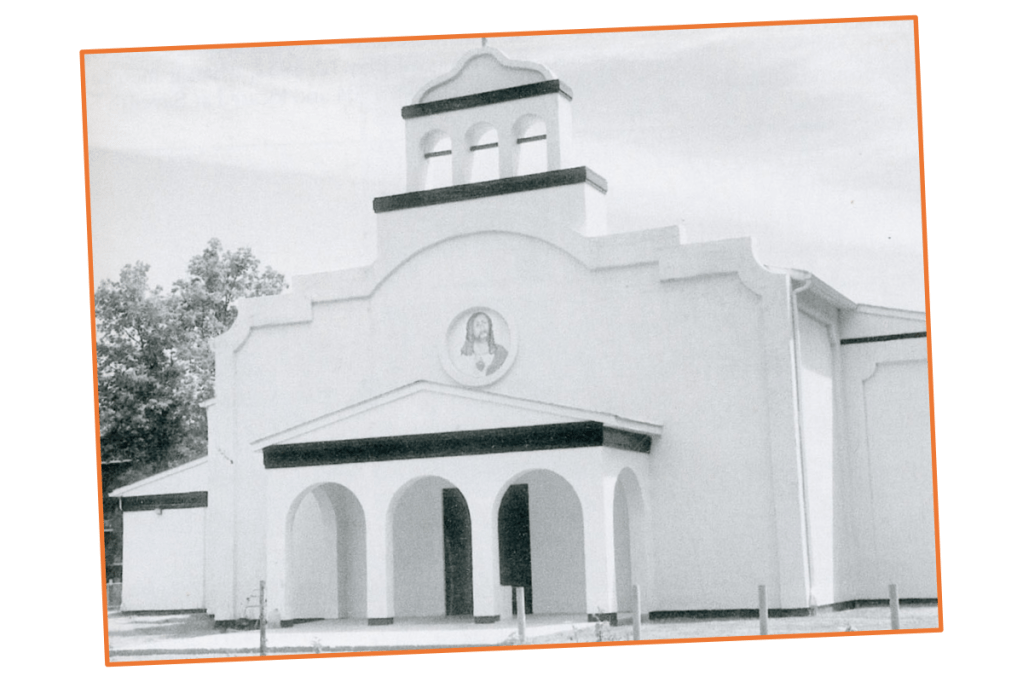
Sammy and his brothers and sisters sang at Mass and at other church events, including weddings, funerals, Easter, and other celebrations. They went to church every day, and singing became part of the rhythm of their lives. Sammy still remembers the church hymns by heart because he and his siblings sang them so often as children.
By the time Sammy reached high school, singing was still an important part of his musical life. He and two of his brothers, Mikey and Robert, sang in their school choirs at the same time. Sammy was a freshman, Mikey was a sophomore, and Robert was a junior; all three sang tenor. Sammy remembers that when the school combined its choirs for performances, the three brothers were placed together. With their large Afros, he jokes, they were easy for their mother to spot in the crowd.
On Channel 43
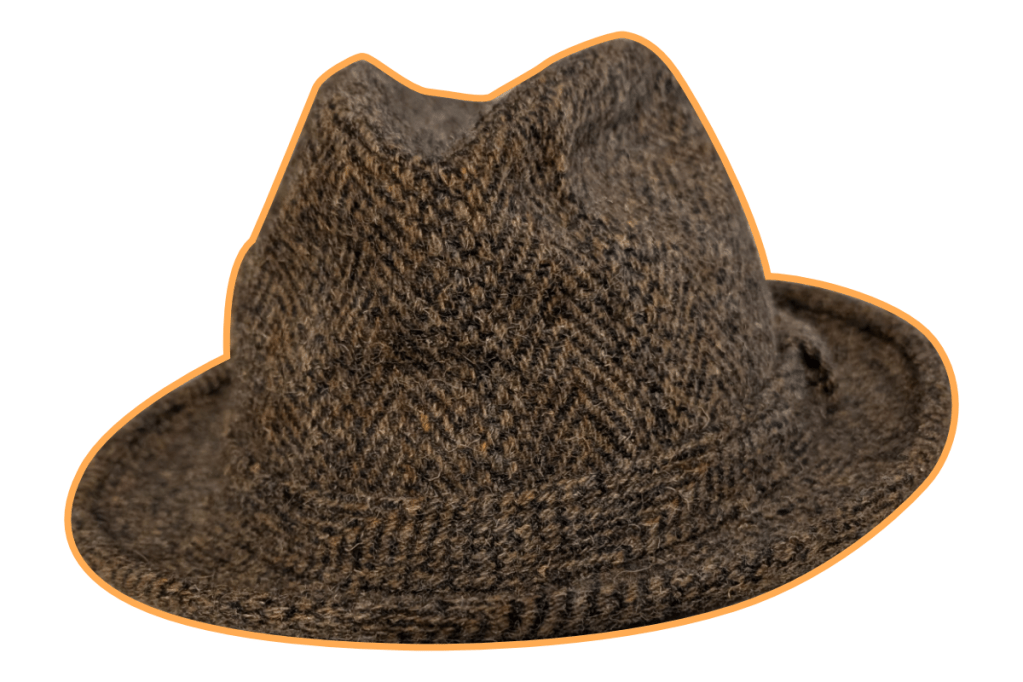
Sammy’s musical inheritance was also expressed publicly in Lorain. He remembers appearing with his father and brothers on Channel 43, where his father dressed as a jíbaro and performed Puerto Rican music for a local television audience. The story offers a glimpse of how Puerto Rican families in Lorain maintained and shared cultural traditions in their new home.
Musical Foundation
By the time Sammy began to discover the music that would shape his career, he already had years of musical experience behind him. He had grown up hearing his mother sing and his father play the cuatro, learning guitar, ensemble singing with his siblings, studying harmony with Brother Cyprian, and performing in family, church, and school settings.These experiences gave him a solid musical foundation that he would carry as he encountered new sounds and the percussion instruments that would become his calling.
Musical Inheritance — Sources and Further Reading
Brady, Dan. “Sacred Heart Chapel Then & Now.” Brady’s Bunch of Lorain County Nostalgia, June 30, 2010. Accessed August 11, 2026. Online source
Catholic Diocese of Cleveland. “Our Diocese, Our Parishes, Our History.” Accessed August 11, 2026. Diocese of Cleveland historical overview
Class Acts Entertainment. “Sammy DeLeon y Su Orquestra.” Accessed August 12, 2026. Class Acts Entertainment — Sammy DeLeon y Su Orquestra
De León, Sammy. Oral history interview. Conducted by Martha S. Santos and Kara Hochstedler, University of Akron, 2025. Video and audio recordings.
Glasser, Ruth. My Music Is My Flag: Puerto Rican Musicians and Their New York Communities, 1917–1940. Berkeley: University of California Press, 1995.
Pérez, Gina, director. Latino Lorain Oral History Project. Oberlin College, Oberlin, Ohio. Latino Lorain Oral History Project
Perse, John. “Records Rendezvous: Sammy DeLeon.” Teaching Cleveland, October 7, 2025. Accessed August 12, 2026. Teaching Cleveland — Records Rendezvous: Sammy DeLeon
Rivera, Celestino. Oral history interview. Latino Lorain Oral History Project, directed by Gina Pérez. Oberlin College, Oberlin, Ohio. Accessed August 11, 2026. Latino Lorain Oral History Project
Rivera, Eugenio “Gene.” “La Colonia de Lorain, Ohio.” In The Puerto Rican Diaspora: Historical Perspectives, edited by Carmen Teresa Whalen and Víctor Vázquez-Hernández, 151–173. Philadelphia: Temple University Press, 2005.
Sacred Heart Chapel. “About Us.” Accessed August 11, 2026. Sacred Heart Chapel
Smithsonian Institution. “Puerto Rican Cuatro Antiguo.” Smithsonian Center for Folklife and Cultural Heritage. Accessed August 11, 2026. Smithsonian: Puerto Rican Cuatro Antiguo